WHY IS INDIA’S DATACENTER MARKET IS SET FOR A ₹2.3 TRILLION BOOM BY 2030?
India’s Datacenter Market Outlook 2026-2030: ₹2.3 Trillion Capex, Hyperscale /Large/Colocation/Enterprise/Edge Datacenter Projects & Scope for Power & RE Players, Cooling system & IT Equipment Suppliers, DG backup suppliers, BESS players - Market Intelligence
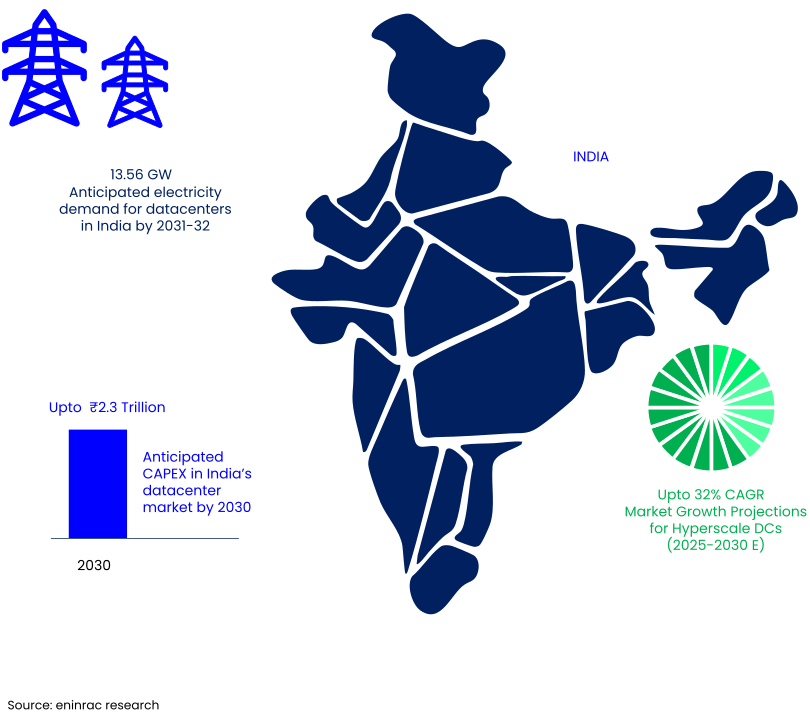
EXECUTIVE SUMMARY & ANALYST PERSPECTIVE
By 2030, India’s data center ecosystem will demonstrate a distinctly solution-heavy investment profile
India’s data center industry is entering a structural growth phase, driven by policy support, 5G expansion, and cloud adoption. Demand will sustain at scale, requiring operators and investors to plan for both rapid capacity addition and long-term resilience.
Market development will concentrate in key hubs. Mumbai, NCR, Hyderabad, and Chennai will lead hyperscale deployments, creating regional clusters of activity. Aligning site strategies with these hubs will be critical for competitive positioning.
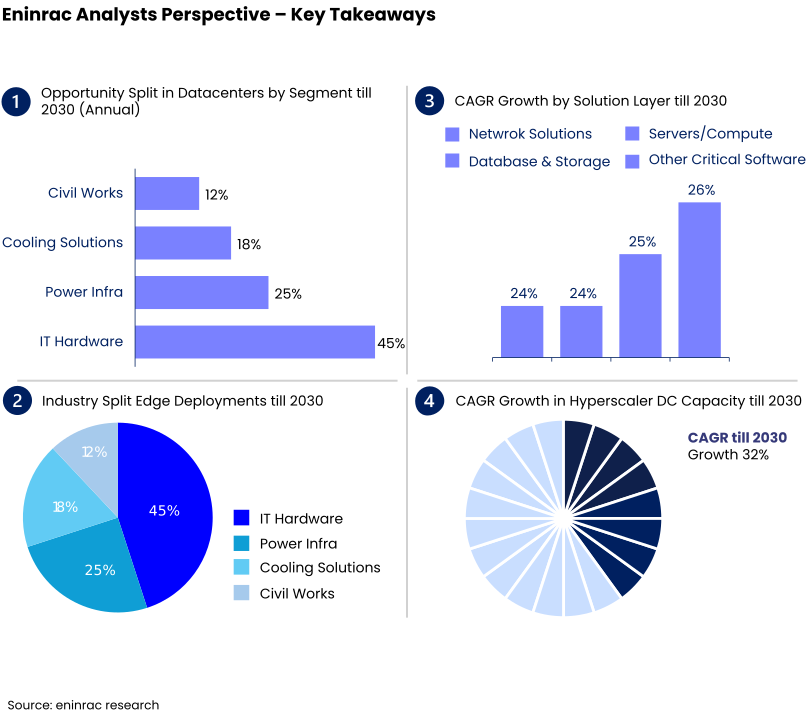
Investment is significant and front loaded. From 2024 to 2030, cumulative ecosystem investment is projected at USD 10–12 billion. This covers IT hardware, networking, power and cooling infrastructure, and construction fit-outs. The solution mix is skewed towards compute and networking. Servers and network equipment will dominate spending, while database, storage, and software deliver higher value per unit. This balance shapes vendor opportunities across the stack.
Eninrac Analysts Perspective – Key Takeaways
EVOLUTION OF INDIA’s DIGITAL ECOSYSTEM
Edge data centers are no longer side projects, but a critical part of India’s digital infrastructure roadmap
India’s digital economy has emerged as a significant growth engine, with its contribution to GDP rising from 11.7% (₹31.6 lakh crore) in 2022-23 to 13.4% (₹44.3 lakh crore) in 2024-25. The sector currently employs nearly 15 million professionals and demonstrates productivity levels five times higher than the overall economy. Its share of GVA is projected to reach 20% by 2029-30.
This rapid expansion is fuelled by advancements in artificial intelligence, cloud services, and digital platforms, with India accounting for 55% of the world’s global capability centres. In the BFSI sector, over 95% of banking payment transactions are now digital, while digital platforms are growing at an annual rate of 30%. By 2030, the digital economy is expected to serve as a pivotal driver of India’s economic transformation and sustained national growth.
One of the central pillars of this digital infrastructure is the expansion and development of data centres. These facilities are critical for meeting the surging demand for cloud computing, data storage, and AI/ML applications. India’s data centre industry is poised for substantial growth, with IT load capacity has crossed 1,000 MW and is expected to expand significantly to 2GW by 2027, aligning with the country’s digital growth trajectory.
India’s DC industry has entered a pivotal phase of transformation, witnessing remarkable scale-up over since 2018. Both colocation and hyperscale facilities are experiencing accelerated demand across major urban hubs, reflecting the structural shift in the country’s digital ecosystem. As of April 2025, India’s aggregate DC footprint across the top seven cities has expanded more than threefold in the last 6–7 years, reaching approximately 16 million sq. ft. with an installed capacity of about 1,263 MW.
The growth momentum is underpinned by multiple structural drivers: rising adoption of digital and cloud-based services, increased IoT and AI integration, progressive government policies, deepening internet penetration, and surging data consumption.
These trends are encouraging both domestic and international operators to commit long-term capital investments, not only in established metro hubs but also in emerging Tier II and Tier III locations.
India’s competitive positioning is further enhanced by cost-effective land availability, robust submarine cable connectivity, reliable commercial power supply, and regulatory imperatives such as data localization norms. Collectively, these factors are propelling India to become one of the fastest-growing DC markets globally.
Looking ahead, demand is expected to shift towards high-density racks, advanced energy storage, and more sophisticated computational infrastructure. At the same time, the sector’s high energy intensity is likely to accelerate the adoption of sustainable practices, including green data centres, energy-efficient storage technologies, and next-generation cooling systems. With inherent advantages across the four critical enablers of DC industry development—land, power, infrastructure, and skilled workforce—India is well-positioned to establish itself as a leading data centre hub within the APAC region.
EVOLUTION OF INDIA’s DIGITAL ECOSYSTEM (contd.)
By May 2025, India’s national compute power crossed 34,000 GPUs
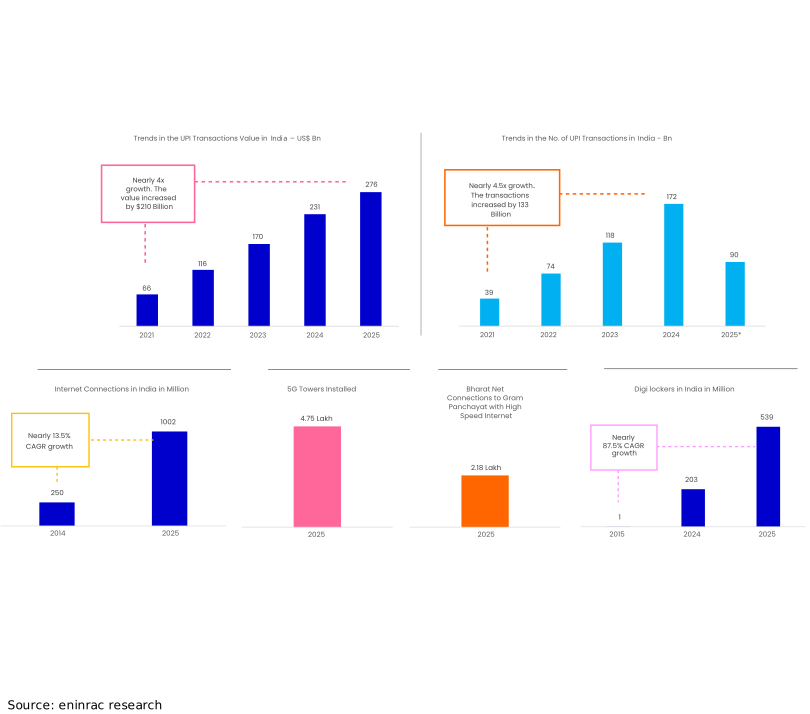
Over the past decade, India has witnessed a profound digital transformation, underpinned by the creation of a strong and scalable digital public infrastructure. Flagship platforms such as AADHAR (biometric identity), DigiLocker (secure digital document storage), and seamless digital payment systems like Unified Payments Interface (UPI), Immediate Payment Services (IMPS), and FASTag for automated toll collection have redefined the way citizens and businesses interact with technology.
This integrated ecosystem has positioned India as the third-largest digital economy globally, following only the United States and China. The pace and scale of digital adoption are now driving unprecedented demand for data centres, which serve as the backbone for cloud computing, fintech innovation, e-governance, and the wider digital services economy.
Eninrac Analysts Perspective – Key Takeaways
RISING DATA USAGE AND MANAGEMENT NEEDs
The rapid surge in data consumption, accelerated by the rollout of 5G services, is transforming India’s digital landscape. This evolution not only enhances governance and operational efficiency but also enables sector-wide benefits across manufacturing, retail, healthcare, agriculture, and real estate. Simultaneously, the deepening penetration of social media platforms and the explosive growth of OTT content are driving unprecedented levels of data traffic. These shifts are catalysing a structural demand for robust, scalable, and energy-efficient data centers, positioning them as critical infrastructure for sustaining India’s digital economy. It is significant to note that the total number of internet subscribers in India has increased from 250 Million in 2014 to 954 Million by the end of Mar’24 to 969 Million at the end of Mar’25 and 1002 Million at the end of Jun’25. Of the total 1002 Million internet subscribers – number of broadband subscribers stands to be 971.9 Million and number of narrowband subscribers is 25.75 Million.
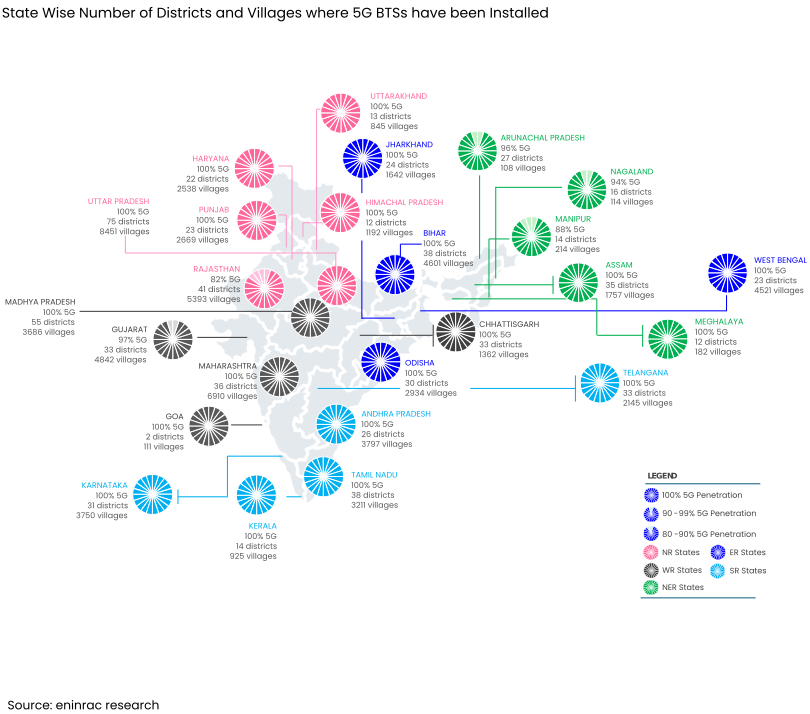
“By March 2025, 5G has been rolled out in nearly 731 districts”
Data Usage Landscape in India - Factsheet
| Details | 31st March 2014 | 31st March 2024 | % increase (March 2024 to March 2025) | 31st March 2025 |
|---|---|---|---|---|
| Definition of Broadband | >= 512 Kbps | >= 2 Mbps | 300 | > 2 Mbps |
| India ranking in avg Internet Download Speed [Ookla speed test] | 130 | 16 | Improved by 114 | 16 |
| Average Download Speed (Mbps) [Ookla speed test] | 4.18 | 105.85 | 2432.2 | 106.6 |
| Total Subscribers (in Million) | 933 | 1199.28 | 28.5 | 1163.7 |
| Urban Tele Density | 145.7% | 133.7% | -8.27 | 124.83% |
| Rural Tele-Density | 43.9% | 59.1% | 34.64 | 58.6% |
| Overall Tele Density | 75.2% | 85.6% | 13.90 | 85.04% |
| Average Data cost/GB (₹) | 268.9 | 9.1 | -96.58 | 8.97 |
| Average Data Consumption (in GB) | 0.26 | 20.2 | 7696 | 27.5 |
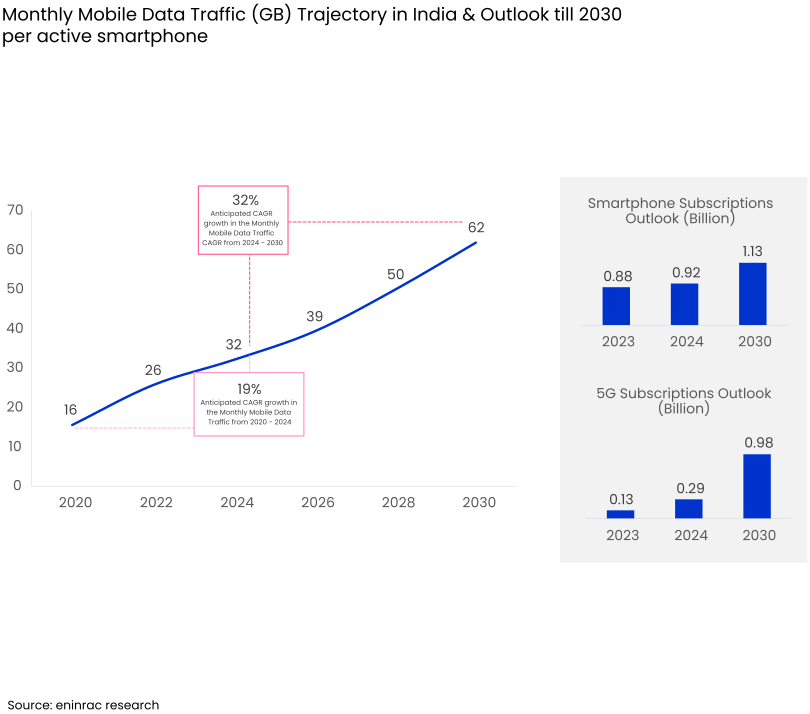
India is witnessing an unprecedented surge in data demand, with average monthly mobile data usage per smartphone projected to rise from 32 GB in 2024 to 62 GB by 2030, driven by video streaming, AR/VR, AI-enabled applications, and Fixed Wireless Access adoption (Ericsson Mobility Report 2024). Smartphone subscriptions are expected to expand from 880 million in 2023 to over 1.13 billion by 2030, while 5G subscriptions are set to grow nearly eightfold, from 132 million in 2023 to ~980 million by 2030, representing nearly 75% of total mobile connections. This rapid transition will significantly increase aggregate data traffic, creating substantial opportunities for investment in data centers, fibre backhaul, edge infrastructure, and energy-efficient digital ecosystems. With India emerging as the largest mobile data consumer globally, the country presents a multi-billion-dollar opportunity in the data center segment, with investments soaring upto US$ 25 Billion by 2030- as hyperscalers, enterprises, and digital service providers increasingly require scalable, sustainable, and strategically located capacity to support exponential data growth.
“India’s OTT market likely to surpass US$ 25 Billion by 2033 from US$ 4.5 Billion in 2024”
INDIA AS A PREFERED RESHORING HUB FOR DATACENTER DEVELOPMENT & SCALING
-
1
India’s data center market is poised for a significant boom, with projections indicating a potential capital expenditure of ₹2.3 trillion by 2030. This growth is driven by several factors, including the increasing demand for digital services, the expansion of cloud computing, and the rise of hyperscale data centers. The country’s strategic location, cost advantages, and supportive government policies are making it an attractive destination for data center development and scaling.
Exhibit 5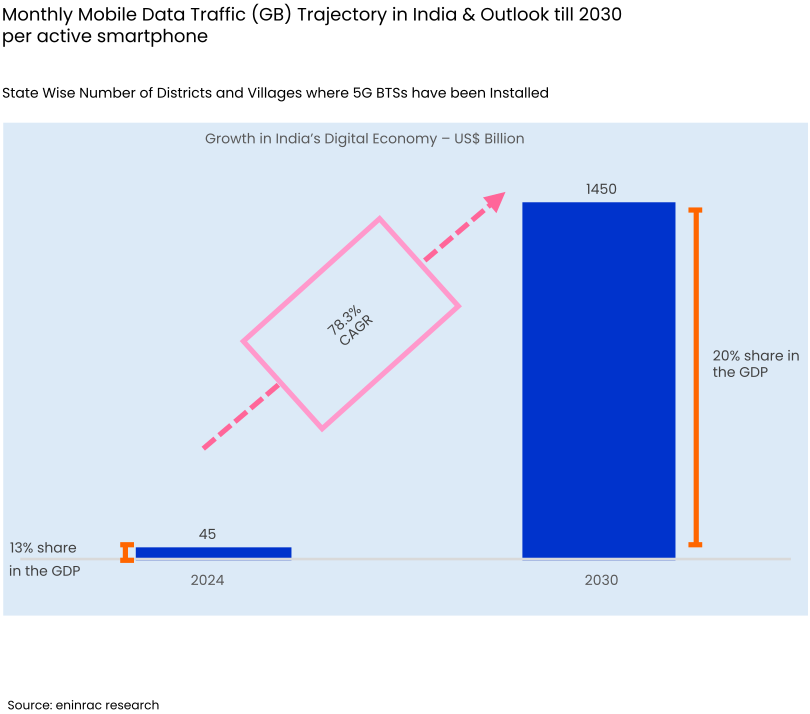
-
2
Scaling smartphone subscribers. Smartphone subscriptions are projected to rise toward ~1.13 billion by 2030 (from ~880 million in 2023), increasing the absolute base of data-hungry endpoints and aggregate traffic. This scale materially expands addressable demand for data-centre capacity.
-
3
Rising demand for mobile data. India’s per-smartphone monthly data consumption is estimated at ~32 GB (end-2024) and is forecast to approach ~62 GB by 2030, driven by video/OTT, AR/VR, FWA and AI workloads — a direct multiplier for on-premises and cloud hosting needs
-
4
Massive 5G migration. 5G subscriptions in India rose to ~290 million by end-2024 and are forecast to reach ~980 million by 2030 (≈75% of mobile subscriptions), accelerating low-latency, bandwidth-heavy services that require proximate compute and edge capacity.
-
5
Growing convergence of cloud computation & AI. India is rapidly scaling up its public cloud service ecosystem and Artificial Intelligence (AI) market, backed by strong government initiatives such as the India-AI Mission and Public AI Computation, a growing AI start-up ecosystem and Generative AI-ready tech talent. This growing convergence of cloud-based services, AI and machine learning is likely to lead to multifold increase in DC demand over the next few years.
Exhibit 6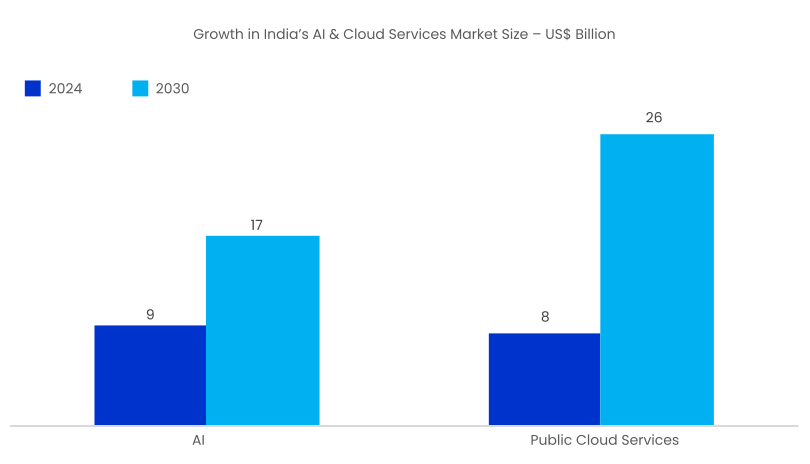
-
6
Cost & scale arbitrage vs. constrained hubs: Compared to saturated hubs (e.g., Singapore, parts of APAC), India offers comparatively lower land costs, sizable green-field sites near fiber corridors, and large local engineering talent pools — enabling faster, lower-cost hyperscale rollouts at GW scale.
Exhibit 7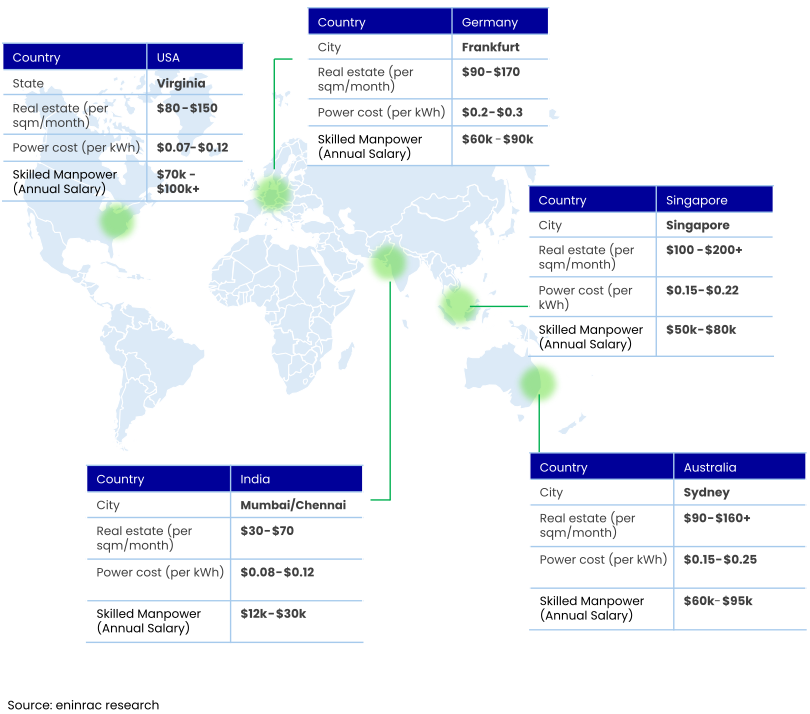
-
7
Investment Commitments by the Large Conglomerates. Both domestic and international players have committed huge capital for shaping the data center industry in India. For example, Google-Investing $6 billion in a 1 GW data center in Andhra Pradesh, Amazon AWS -Committed $12.7 billion by 2030 to build cloud infrastructure, including a presence in Hyderabad, Microsoft-Planning a $3 billion investment by 2025 to build new data centers and support AI growth in India, Adani Connex-Developing hyperscale data centers, including a 100 MW campus in Chennai, Anant Raj -a real estate player investing heavily in data centers, including a projected $ 1.5 Billion for a 300 MW facility.
-
8
State level investment centric support. State governments in India are creating favourable policy and regulatory environment to attract data center development in India. For example- NTT Data, Neysa Networks have signed MoU with the Telangana government to build AI datacenter cluster worth ₹ 10,500 crores, Rajasthan data center policy to attract ₹ 20,000 crores by 2030, Uttar Pradesh is eying investments from private sector worth ₹ 30,000 crores to build 8 data center parks of total 900 MW capacity by 2030.
-
9
Network and international connectivity. India has the potential to become a dominant player in the global submarine cable network due to its strategic geographical location. The country currently hosts around 17 international subsea cables across 14 landing stations located in Mumbai, Cochin, Tuticorin, Chennai, and Trivandrum. As of the end of 2022, the total lit capacity and activated capacity of these cables stood at 138.606 Tbps and 111.111 Tbps, respectively.
-
10
Global ESG & Hyperscaler Alignment. Global hyperscalers (Google, AWS, Microsoft, Meta) have made 100% RE sourcing pledges by 2030. India’s RE tailwinds allow them to align their corporate ESG goals with on-ground sourcing feasibility, making Indian campuses natural candidates for large-scale cloud deployments. Additionally, with Electricity (Promoting Renewable Energy through Green Energy Open Access) Rules, 2022, large power consumers like DCs can contract RE directly, including hybrid (solar+wind) plus storage solutions, at competitive rates, bypassing DISCOM bottlenecks.
-
11
Policy & localization push: India’s digital policy environment and growing focus on data-localization and sovereign cloud/critical infrastructure policies create regulatory incentives for onshore capacity and regional hosting of critical workloads. This reduces the commercial risk of offshoring data
CITY WISE DATACENTER DYNAMICS
India’s data centre market has entered a decisive growth phase, with city clusters emerging as strategic anchors for both hyperscalers and enterprise clients. Mumbai continues to dominate, hosting over 536 MW of live IT load and nearly 4 million sq. ft. of white-floor stock, supported by dense fiber connectivity and subsea cable landings. This unmatched ecosystem makes it the preferred choice for hyperscale deployments, with lease rates commanding a premium of INR 9,000–12,000 per kW per month. New builds in the city are increasingly targeting, PUE levels of 1.2 or loweras sustainability commitments from hyperscalers and BFSI clients put pressure on operators to secure renewable PPAs and adopt advanced cooling systems.
Southern hubs are gaining traction as cost-competitive alternatives with strong growth pipelines. Chennai, with ~113 MW live capacity and proximity to subsea cable gateways, is now a hotspot for OTT and CDN players, while Bengaluru, at 150–165 MW, continues to attract global capability centres (GCCs) and AI/ML workloads. Lease rates across South India average ₹ 6,650–8,500 per kW per month, offering significant cost arbitrage compared to Mumbai, while PUE targets remain in the 1.2–1.35 range. Hyderabad is rapidly emerging as a new-age hub with 35–45 MW operational capacity and strong policy incentives. Its competitive pricing and scalable land availability are drawing hyperscaler and enterprise interest, positioning the city as a major growth market by 2026.
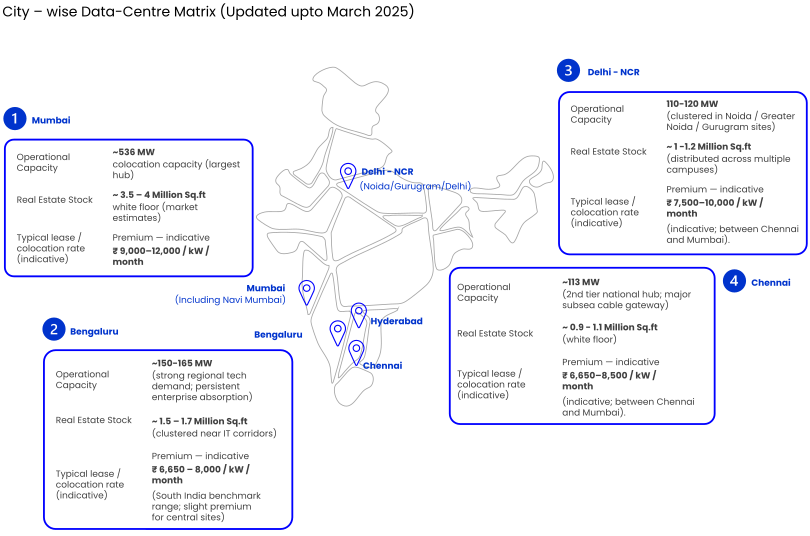
Meanwhile, the Delhi-NCR cluster has established itself as a strategic hub for sovereign and government cloud demand, with ~110–120 MW live IT load and a growing pipeline concentrated around Noida and Greater Noida. Lease rates here are in the ₹ 7,500–10,000 per kW per month range, reflecting a balanced demand profile from BFSI, public sector enterprises, and technology companies. Across these metros, operators are converging on design targets of PUE 1.2–1.3 for new builds, aligning with global best practices and sustainability benchmarks. This city-wise dispersion of capacity, pricing, and efficiency levels underscores the broader business case: India’s data centre market offers both high-premium, low-risk opportunities in Mumbai and NCR, and high-growth, cost-efficient opportunities in Chennai, Bengaluru, and Hyderabad.
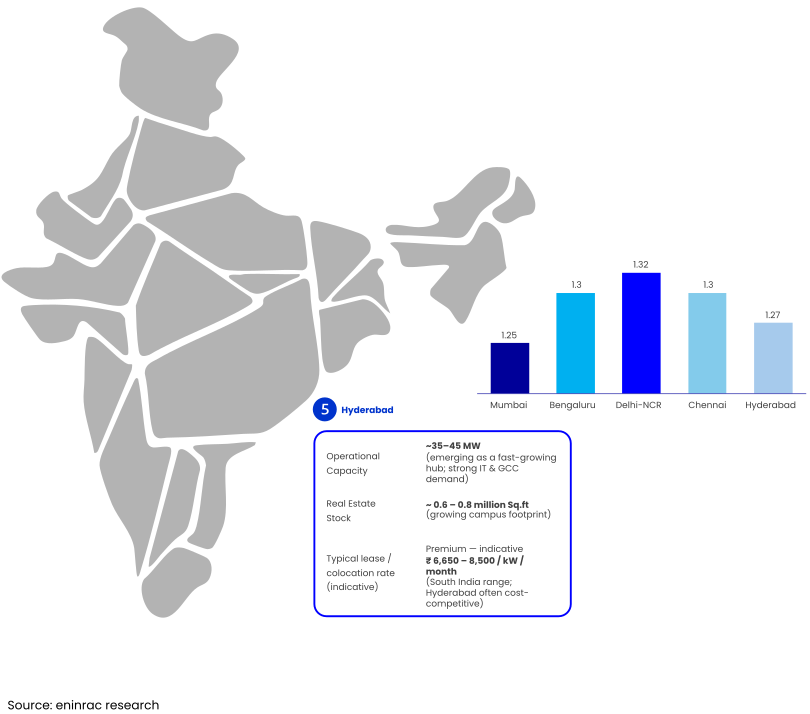
CLOUD DATA CENTER OUTLOOK (2028 -2030)
The period 2028–2030 will represent the second major growth wave of Internet-facing cloud data centers in India. By this time, the first cycle of large hyperscale campuses (2025–27) will have stabilized, and operators will move to aggressive scaling across NCR, Hyderabad, Mumbai, and Chennai. Emerging hubs like Pune and Bengaluru will also gain traction as cloud spillovers and enterprise workloads demand distributed locations.
By 2030, India’s cumulative cloud-based capacity is projected at ~1.0–1.2 GW, cementing its position as the largest cloud hub in Asia-Pacific outside China. Growth will be driven by demand from hyperscalers (AWS, Microsoft, Google, Oracle, Meta), increasing AI/ML workloads, data sovereignty mandates, and stronger subsea connectivity.
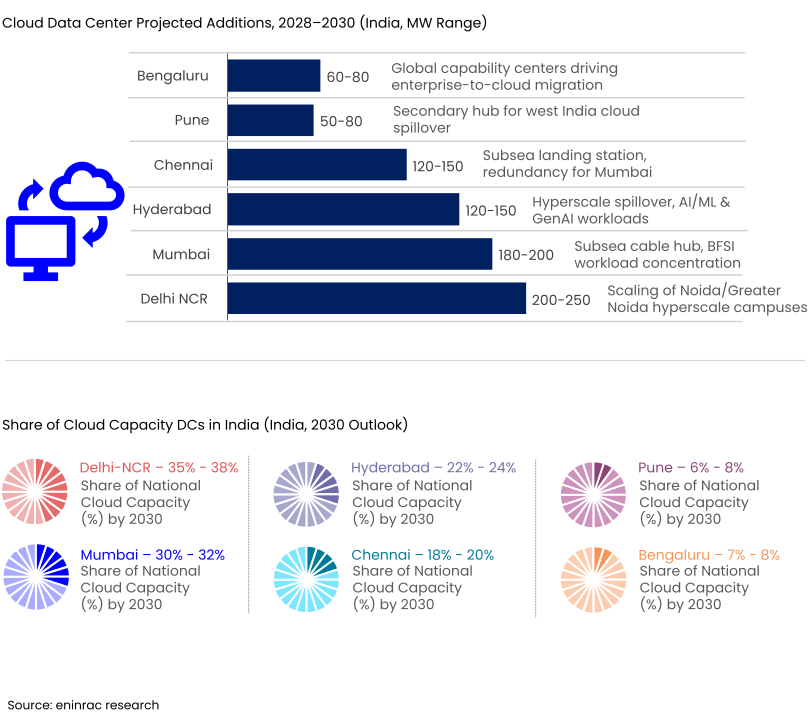
ENTERPRISE EXPANSION DATA CENTER OUTLOOK (2028 -2030)
Between 2028 and 2030, India is expected to add 210–260 MW of new enterprise-dedicated data center capacity, reflecting steady but sector-driven growth. Mumbai (60–70 MW) and NCR (40–50 MW) will anchor this expansion, driven by BFSI, insurance, and IT captive requirements. Hyderabad (30–40 MW) and Chennai (30–35 MW) will emerge as strong secondary hubs, with hybrid enterprise demand and disaster recovery (DR) positioning shaping investments. Bengaluru (25–30 MW) will see builds linked to Global Capability Centers, while Pune (15–20 MW) adds capacity from IT and automotive enterprises. Kolkata (10–15 MW) will contribute a modest but strategic share, largely BFSI-driven, ensuring regional coverage in Eastern India.
INDIA’S DATA CENTER EXPANSION: POWER CAPACITY OUTLOOK
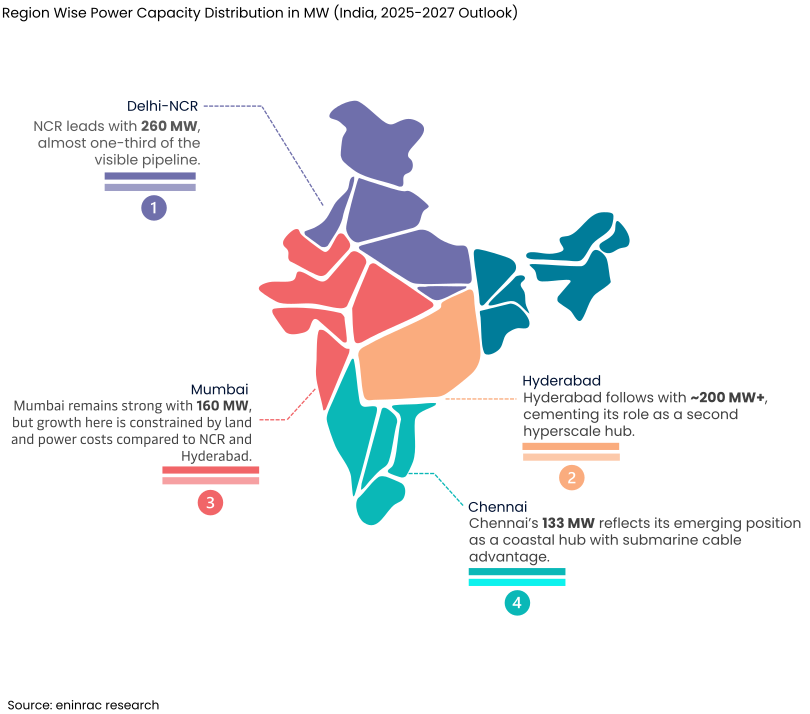
India’s data center industry is moving into an aggressive build-out phase with hyperscale players, domestic operators, and global cloud majors scaling capacity. Power capacity remains the single most critical metric defining the size and competitiveness of these facilities. Based on the current pipeline, the market is set for a sharp surge in installed and under-development IT load across top metros by 2027.
Power Capacity Additions: 2025 Front-loaded Growth
The year 2025 alone accounts for the bulk of committed supply. About 350 MW of new data center capacity is expected to come online in this year, with the largest facilities being Microsoft Hyderabad Campus (100 MW), NTT Noida Campus (50 MW), STT Mumbai 3 (50 MW), PDG MU2 in Mumbai (48 MW), and Adani Connex Chennai DC1 (33 MW). Yotta’s D-2 in Navi Mumbai (30 MW) and STT Hyderabad 2 (36 MW) further reinforce the heavy expansion bias in 2025. Enterprise-oriented expansions such as Web Werk's HYDC2 (18 MW), CapitaLand HYDC1 (24 MW) and Sify Mumbai (12 MW) complement hyperscale growth.
This translates into a significant power capacity spike in 2025, positioning India’s Tier I cities as critical digital infrastructure hubs. Mumbai, Hyderabad, and NCR alone will absorb nearly three-fourths of this upcoming capacity.
EXISTING COLOCATION AND HYPERSCALE DATACENTER STOCK
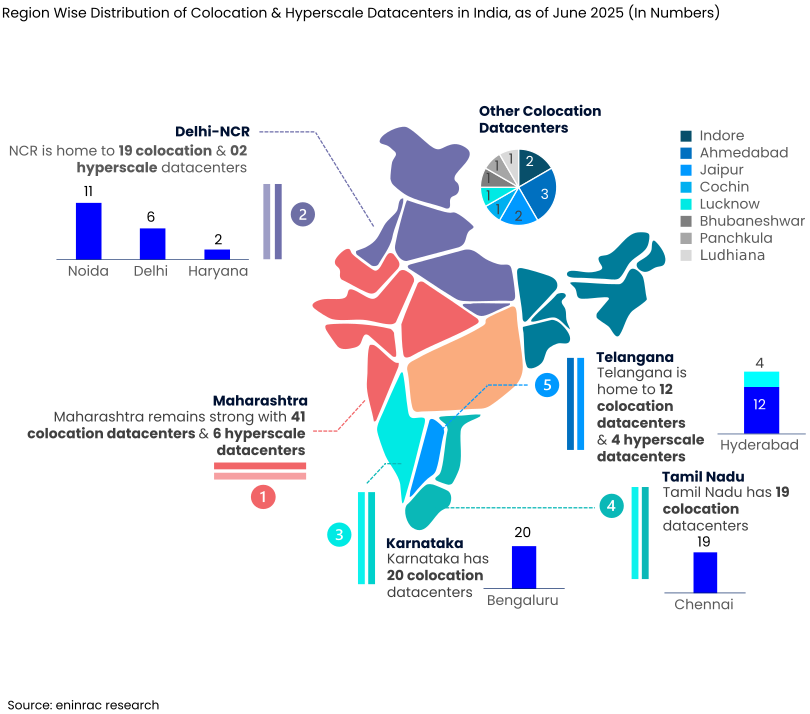
India's colocation data center market is experiencing a transformative boom, driven by unprecedented data consumption, rapid digitalization, and supportive government initiatives like 'Digital India'. Key metropolitan areas—Mumbai, Chennai, Bengaluru and the National Capital Region (NCR)—form the primary hubs, prized for their submarine cable landing stations, fiber connectivity, and power infrastructure. Enterprises are increasingly adopting a hybrid cloud model, fuelling demand for secure, scalable, and interconnected colocation facilities. While immense growth potential exists, the sector must navigate challenges including power availability, water usage for cooling, and the urgent need for sustainable operations. Major global and domestic operators are making significant investments, positioning India as a critical and expanding node in the global digital infrastructure landscape. The market's future will be defined by its ability to scale sustainably while meeting the evolving demands of hyperscalers and enterprises alike.
As of June 2025, India's digital infrastructure landscape is robust, with 127 operational colocation data centers. The market is on a significant growth trajectory, with a pipeline of an additional 32 facilities anticipated to be commissioned by 2030. Geographically, deployment remains highly concentrated, with the major metropolitan hubs of Mumbai, Bengaluru, Chennai, and Delhi-NCR collectively hosting approximately 73% of the nation's colocation capacity. This concentration is driven by factors including robust fiber connectivity, proximity to financial and technology sectors, and critical infrastructure access. Strategic investment in these primary and emerging secondary markets is paramount for capitalizing on India's accelerating digital economy.
USER DEMAND
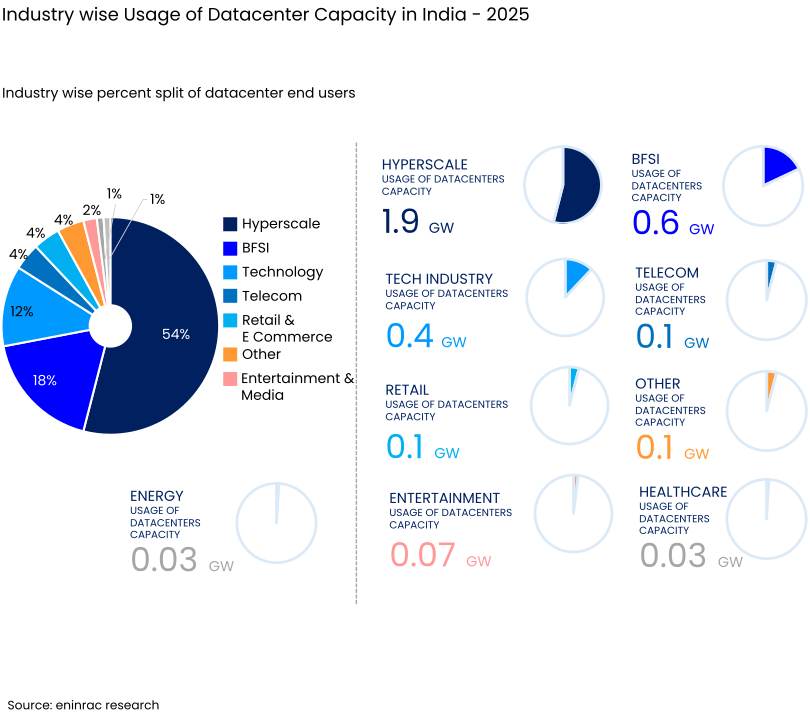
The Indian data center landscape is characterized by distinct industry-driven demand patterns. Followed by hyperscalers, the BFSI sector is a primary consumer, driven by data localization mandates and digital banking, requiring tier-IV, low-latency storage for transactional integrity. Cloud & IT/ITeS form the largest segment, fuelling hyperscale capacity for SaaS, IaaS, and global delivery centers. E-Commerce & Retail leverage storage for personalization, logistics, and media, showing one of the highest growth rates. Telecommunications demand is surging due to 5G and IoT, necessitating expansive edge and core storage networks. Media & Entertainment dominate archival and content delivery storage, driven by OTT and gaming. Emerging sectors like Manufacturing (Industry 4.0) and Healthcare (genomics, telemedicine) are rapidly adopting high-performance computing and compliant storage solutions, positioning them as future growth engines. This diversification underscores the need for tailored, industry-specific data center strategies. Hyperscalers accounts to 54% of the datacenter usage in the country followed by BFSI at 18% and tech industry at 12%.
RENTAL RATES & POWER COSTs
Indian colocation providers typically operate under two pricing models. The Per Rack, Per Month model is widely used in retail colocation, catering to smaller deployments such as partial racks, single racks, or setups of up to ~10 racks, and generally includes a standard power density of 3–5 kW, along with cooling and physical security. In contrast, the Per kW, Per Month model is the preferred approach for wholesale and large-scale colocation commitments, usually starting from 1 MW and above, where clients are billed based on the contracted power capacity and space is provided as an inclusive element. This structure enables greater flexibility and scalability, particularly for high-density workloads.
Critical Cost Components & Additional Charges
The base rental rarely represents the total cost. Key additional charges include:
- Cross-Connect Fees: A recurring monthly charge (₹ 3,000 - ₹ 10,000 per connection) for linking your rack to a cloud on-ramp (AWS Direct Connect, Azure ExpressRoute) or a carrier network
- Power Usage Effectiveness (PUE) Charges: Some operators charge a fee based on the facility's PUE to account for shared cooling costs
- Remote Hands Support: Basic support is often included. Complex tasks may incur hourly charges (₹ 2,500 - ₹ 5,000/hour)
- Bandwidth: If not included, internet bandwidth is charged separately, typically per Mbps or per committed data rate (95th percentile billing)
- One-Time Setup Fees: Costs for installation, cabling, and rack setup.
| Cities | Tier III Facility (Per Rack) | Tier IV Facility (Per Rack) | Wholesale (Per KW) |
|---|---|---|---|
| Mumbai | ₹ 65,000 - ₹ 85,000 | ₹ 80,000 - ₹ 1,10,000+ | ₹ 18,000 - ₹ 25,000 |
| Chennai | ₹ 55,000 - ₹ 75,000 | ₹ 70,000 - ₹ 90,000 | ₹ 15,000 - ₹ 20,000 |
| Delhi-NCR (Noida) | ₹ 50,000 - ₹ 70,000 | ₹ 65,000 - ₹ 85,000 | ₹ 14,000 - ₹ 19,000 |
| Hyderabad | ₹ 45,000 - ₹ 65,000 | ₹ 60,000 - ₹ 80,000 | ₹ 13,000 - ₹ 17,000 |
| Bengaluru | ₹ 60,000 - ₹ 80,000 | ₹ 75,000 - ₹ 95,000 | ₹ 16,000 - ₹ 22,000 |
| Kolkata | ₹ 40,000 - ₹ 60,000 | ₹ 55,000 - ₹ 75,000 | ₹ 12,000 - ₹ 16,000 |
| Pune | ₹ 45,000 - ₹ 65,000 | ₹ 60,000 - ₹ 80,000 | ₹ 13,000 - ₹ 17,000 |
Note: The above table depicts estimated rental ranges for a standard 42U rack with a 3-5 kW power commitment. These are indicative market averages. Significant discounts are negotiable for multi-rack, multi-year, or high-power commitments.