Executive Summary & Analyst Perspective
UAE and Saudi Arabia dominate the region’s investment landscape, with billions committed to hyperscale, cloud, and AI data centre projects
The GCC datacentre market in 2025 is positioned for unprecedented expansion, with Saudi Arabia and the UAE leading a fast-evolving landscape driven by sovereign projects, AI infrastructure ambitions, and accelerated enterprise cloud adoption. Capacity build-outs, regulatory modernization, and government incentives have transformed the region into a magnet for global and regional investment across hyperscale, colocation, and AI-ready datacentre assets. Saudi Arabia and UAE anchor the GCC datacentre expansion, with Center3 targeting 1 GW total capacity by 2030, mostly in Saudi Arabia and Bahrain. UAE is set to increase its operational datacentre capacity by 165% by 2028, with investment pipelines exceeding USD 46 billion and an active buildout of 17 new facilities. Bahrain and select other MENA markets are experiencing parallel growth, spurred by digital transformation initiatives and public-private partnerships. The UAE has set ambitious goals to become a global leader in Artificial Intelligence (AI). AI is expected to contribute over USD 96 billion to the country’s GDP by 2031, with annual growth projected between 20-30%.
Saudi Arabia’s datacentre expansion capacity stands at 1963 MW, concentrated across key hubs. Neom leads with 1000 MW, reflecting its commitment to become the primary digital and commercial center. Dammam and Riyadh follow with 241.25 MW and 191.75 MW respectively, supported by strong colocation and hyperscale upcoming projects. Other regions collectively add 495 MW, showing growing nationwide infrastructure expansion beyond major metros. Qatar’s upcoming data center pipeline totals 112.9 MW across three planned projects, marking a significant scale-up compared to existing capacity. While the specific locations have not yet been disclosed, all upcoming facilities are expected to be hyperscale-oriented, reflecting growing demand from cloud providers, digital services, and large-scale enterprise workloads. This next wave of development positions Qatar to strengthen its regional competitiveness in high-density, cloud-ready infrastructure.
Bahrain’s upcoming data center pipeline totals 49.7 MW across seven planned projects, signaling a major expansion of the country’s digital infrastructure. Hamala will host a 2.7 MW facility supported by a large buildout footprint of 139,355 sq.m, positioning it as a strategically significant development. The remaining six projects—totaling 47 MW—are planned at undisclosed locations and include a mix of hyperscale and colocation facilities, supported by an additional 14,800 sq.m of buildout space. Together, these developments reflect Bahrain’s accelerating push to scale cloud-ready capacity and strengthen its regional data center capabilities.
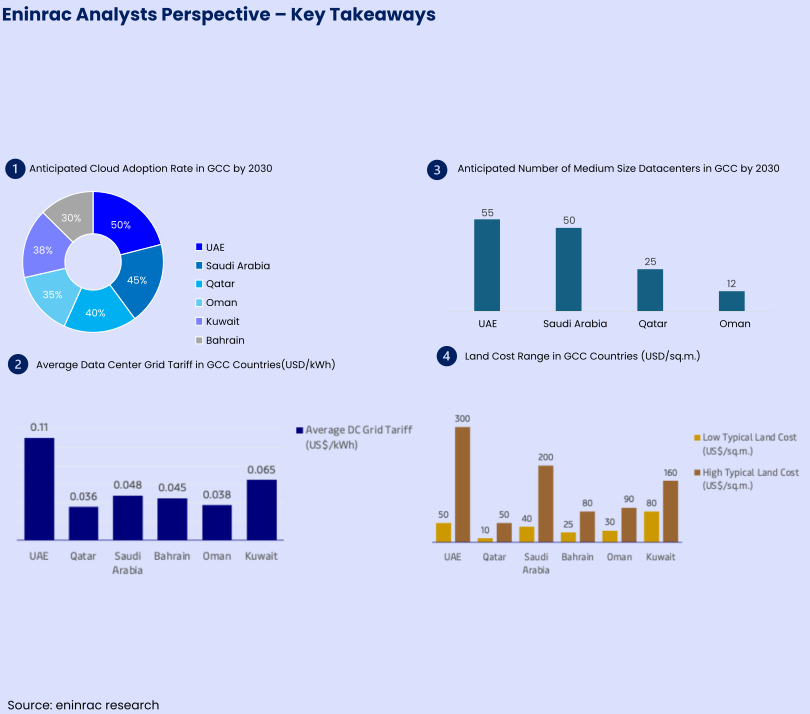
Between 2024 and 2030, the GCC data center landscape will expand rapidly, driven by digital transformation, AI workloads, and cloud adoption. Medium-sized data centers will grow faster than small sites as enterprises and governments seek scalable, compliant, and regionally distributed infrastructure. Across the GCC, medium data centers will play a central role. They balance cost, capacity, and deployment speed, supporting both enterprise workloads and hyperscale integration. By 2030, medium data centers will account for about 45%–50% of all operational sites in the region, signaling a decisive shift toward regionalized, scalable digital infrastructure. The GCC-wide data center market research trends showing a steady increase in total facility counts, with UAE and Saudi Arabia driving most of the growth, followed by Qatar and Bahrain as emerging hubs. Oman and Kuwait have smaller but growing footprints
DATACENTER MARKET OVERVIEW OF GCC
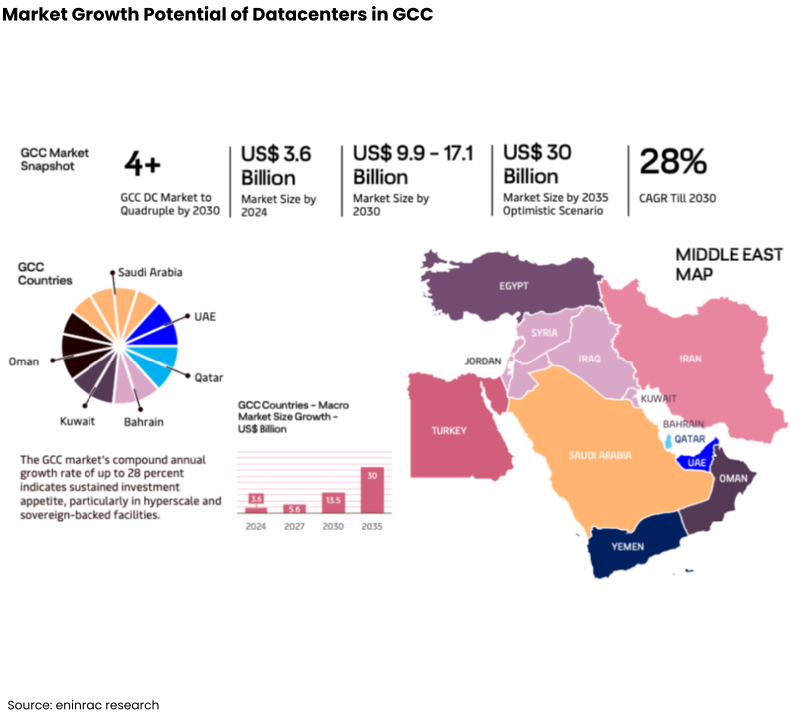
The GCC data center market is undergoing an unprecedented growth phase driven by sovereign digitalization programs, hyperscaler investments, and rising AI and fintech workloads. The sector’s transformation aligns with national agendas such as Saudi Arabia’s Vision 2030 and the UAE’s digital-first government model, making the region one of the fastest-growing digital infrastructure hubs globally. Colocation and hyperscale facilities are the backbone of capacity expansion, supported by strong sovereign funding, subsea cable connectivity, and the entry of global cloud operators. Saudi Arabia and the UAE together account for more than 80 percent of upcoming power capacity, reflecting their strategic position as the digital anchors of the Middle East. The GCC data center market is expanding rapidly, supported by large-scale sovereign investments, rising AI workloads, and aggressive digital transformation plans across member states. Market value is expected to increase from USD 3.2–4.0 billion in 2024 to between USD 9.9 and 17.1 billion by 2030, reflecting a compound annual growth rate of up to 28 percent.
This growth momentum is underpinned by consistent capital inflows from both public and private entities, a robust project pipeline, and strong policy alignment with national digitalization programs such as Saudi Arabia’s Vision 2030 and the UAE’s Smart Nation agenda. The investment surge is also driven by the region’s strategic push to attract hyperscale operators, develop sovereign cloud infrastructure, and improve connectivity through new subsea cable systems. By 2035, the market could touch USD 30 billion under favorable investment and regulatory conditions. The combination of sovereign funding, private equity participation, and hyperscaler entry points to a decade of accelerated capacity buildout and long-term infrastructure sustainability across the GCC.
GCC Data Infrastructure Enters a High-Capacity Buildout Phase
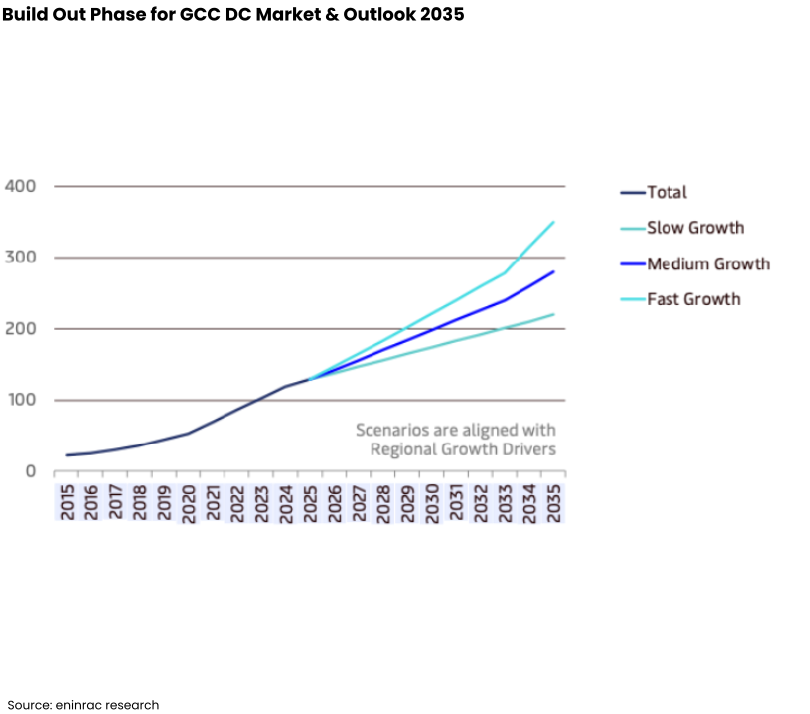
Total pipeline capacity through 2028 stands at nearly 4 GW, underscoring a robust multi-year investment cycle worth over USD 3.1 billion in civil, power, and mechanical-electrical infrastructure. With colocation accounting for over 99 percent of operational models, the GCC market continues to favor scalable, multi-tenant designs that meet hyperscaler requirements while supporting enterprise cloud migration and sovereign digitalization programs.
Capacity Expansion Momentum
- The GCC is entering a decisive phase of high-capacity data infrastructure buildout.
- By 2025, about 129 data centers will be operational across the region.
- An additional 61 centers are planned, forming a strong forward pipeline.
- Saudi Arabia and the UAE lead the expansion, accounting for most new capacity.
- This reflects the region’s push to meet rising digital and AI-driven workloads.
Investments Surge Ahead
- Nearly USD 3.1 billion will be invested between 2024 and 2027 in data infrastructure.
- Spending focuses on civil works, power systems, and MEP components.
- The investment trend highlights growing institutional and sovereign participation.
- These projects reinforce long-term confidence in the region’s digital economy.
Colocation Dominance Continues
- Colocation remains the preferred model, accounting for over 99 percent of facilities.
- Operators favor scalable, multi-tenant structures suited for hyperscale clients.
- The model supports enterprise cloud migration and sovereign cloud initiatives.
- This approach strengthens operational flexibility and ensures rapid market scalability.
TOTAL ADDRESSABLE MARKET
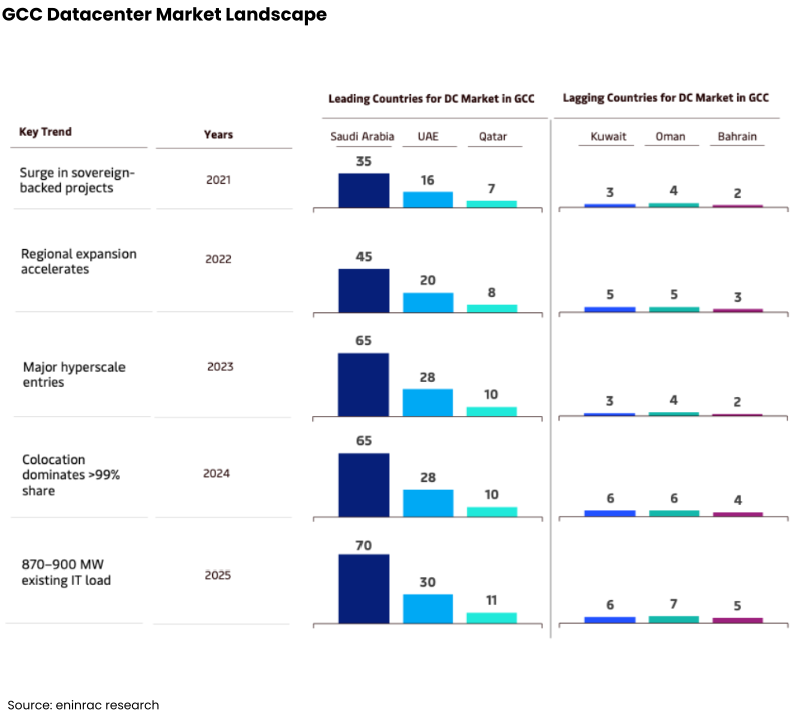
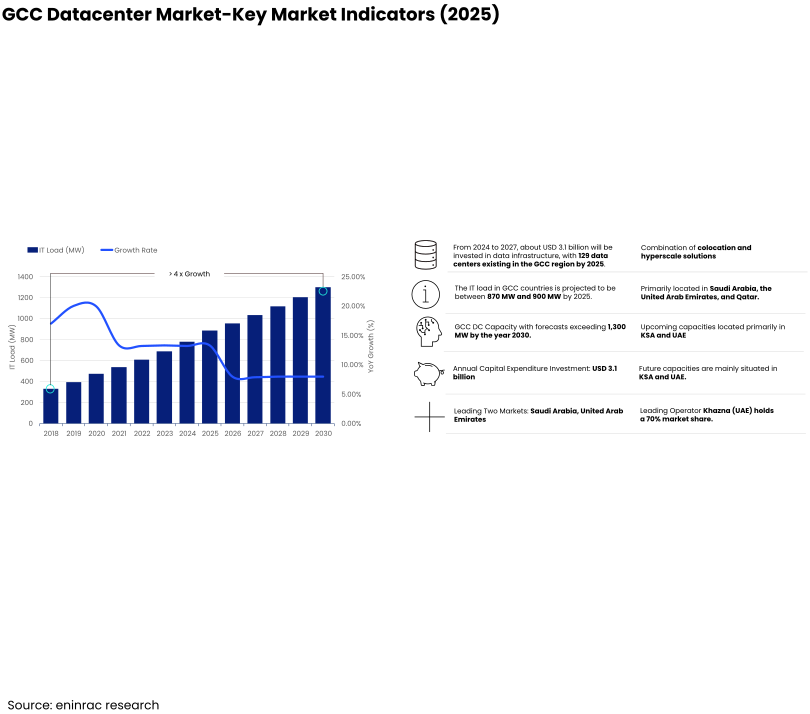
The GCC data center ecosystem has entered a phase of accelerated maturity. As of 2025, the region hosts an estimated 129 operational facilities with an aggregate IT load between 870–900 MW. Saudi Arabia and the UAE account for over two-thirds of this capacity, driven by hyperscale and sovereign digital infrastructure investments. An additional 4,000 MW of capacity is under development between 2024 and 2028, positioning the GCC as one of the fastest-growing data center hubs globally. Annual CapEx investment is projected at USD 3.1 billion, focused on civil works, power systems, and MEP infrastructure. Khazna Data Centers (UAE) remains the dominant player, holding approximately 70 percent market share across operating and under-construction capacity. The market remains predominantly colocation-led, though hyperscale and edge facilities are set to expand their footprint over the next decade.
IT Load Growth Trend (2018–2030): Scaling for Digital Sovereignty
The GCC and wider Middle East data center capacity has grown nearly 3.5 times between 2018 and 2025, propelled by rising hyperscale demand, cloud localization mandates, and enterprise digitization. IT load across the Middle East increased from ~330 MW in 2018 to ~900 MW in 2025, with projections crossing 1,300 MW by 2030. This capacity expansion reflects a clear regional intent to build sovereign digital ecosystems capable of supporting artificial intelligence, IoT networks, and data-intensive applications. The largest share of this incremental load is being absorbed by hyperscale data centers and government-backed digital infrastructure programs.
Facility Type Evolution: Transitioning Beyond Colocation Dominance
While colocation remains the backbone of GCC data infrastructure with over 99 percent share in 2024, market dynamics are gradually shifting. The rise of hyperscale facilities (5–7 percent projected by 2030) signals the maturing of cloud-native demand and digital transformation initiatives.
Simultaneously, edge computing is gaining ground, expected to reach 7–10 percent of facilities by 2030. Edge deployments will be driven by smart city programs, 5G rollouts, and AI-enabled low-latency applications across logistics, energy, and fintech sectors. This evolution marks a structural decentralization of data infrastructure, where hyperscale and edge nodes complement the colocation base, enabling both national data sovereignty and operational resilience.
Country Wise Trends & Regional Details
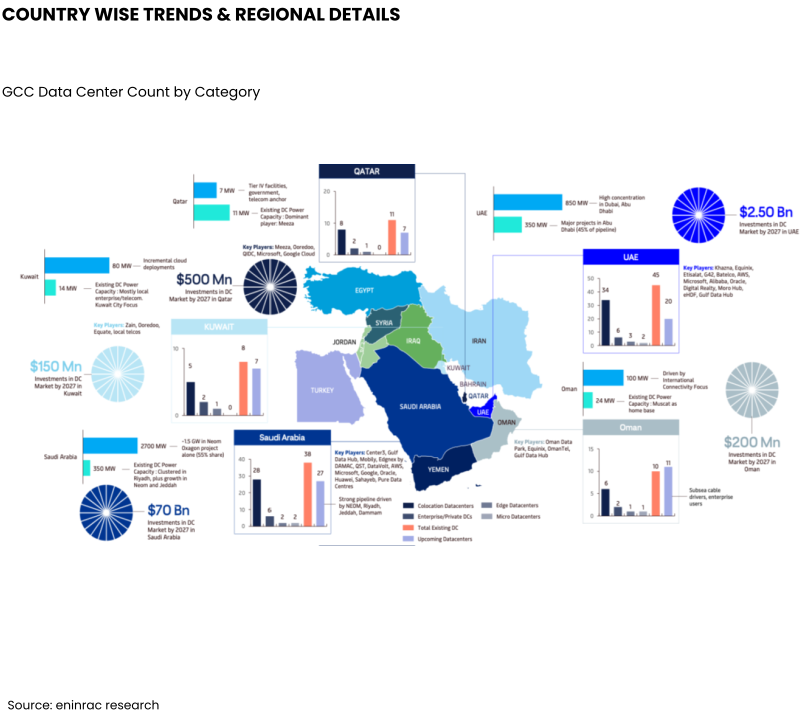
Saudi Arabia dominates the region's data centre pipeline by a wide margin, with $70 Bn in projected investments by 2027 and 2,700 MW of incremental capacity — over half of it tied to the single Neom Oxagon project — reflecting the Kingdom's Vision 2030-driven digital infrastructure push. The UAE follows as the second anchor market ($2.50 Bn, 850 MW), with Dubai and Abu Dhabi accounting for the bulk of concentration and a mature, diversified operator base (Khazna, Equinix, G42, AWS, Microsoft, Oracle). Together, Saudi Arabia and the UAE represent the clear tier-one cluster, both in absolute capacity and depth of hyperscaler/colocation participation. Qatar, Oman, and Kuwait form a distinct tier-two group, each in the $150–500 Mn investment range, with capacity additions largely incremental (11–100 MW) rather than transformational. Oman's growth appears to be driven by subsea cable connectivity, Qatar leans on Tier IV government/telecom anchor tenants, and Kuwait remains largely local enterprise/telecom-driven with limited hyperscale presence. Across all markets, colocation and total-existing-DC categories consistently outpace enterprise/private, edge, and micro datacentres — suggesting the region's growth is being led by third-party/colocation operators rather than in-house enterprise builds, with edge and micro segments still nascent. This points to a market structure where hyperscale and colocation players are effectively setting the pace of regional digital infrastructure expansion, while edge computing remains an emerging rather than established layer.