Europe's Data Center Boom: Revenue Opportunities for Utilities, Renewable Energy Players and Grid Operators
Key Takeaways: Europe's Data Center Market
- Europe's data center market is projected to nearly double from US$47 billion in 2024 to US$97 billion by 2030, growing at a CAGR of ~12.8%
- The EU is mobilising approximately US$234 billion in AI-focused investments, directly fuelling data center infrastructure demand
- AWS, Microsoft, and Google account for more than 60% of announced capacity additions across FLAP-D and Nordic markets
- Finland recorded the highest year-over-year growth in the Nordics at 28.7%, followed by Sweden at 25.3%
- Over 330 MW of new data center capacity is under construction across the UK, Ireland, France, and the Netherlands in 2025–2026
- 67% of European data center operators cite power and grid access as their single greatest operational challenge
- Average rack density has risen from 6–8 kW a decade ago to 12–15 kW today, with AI-optimised halls exceeding 30 kW per rack
- Iceland leads Europe in energy efficiency with an average PUE of 1.10 and the lowest power cost at €35/MWh
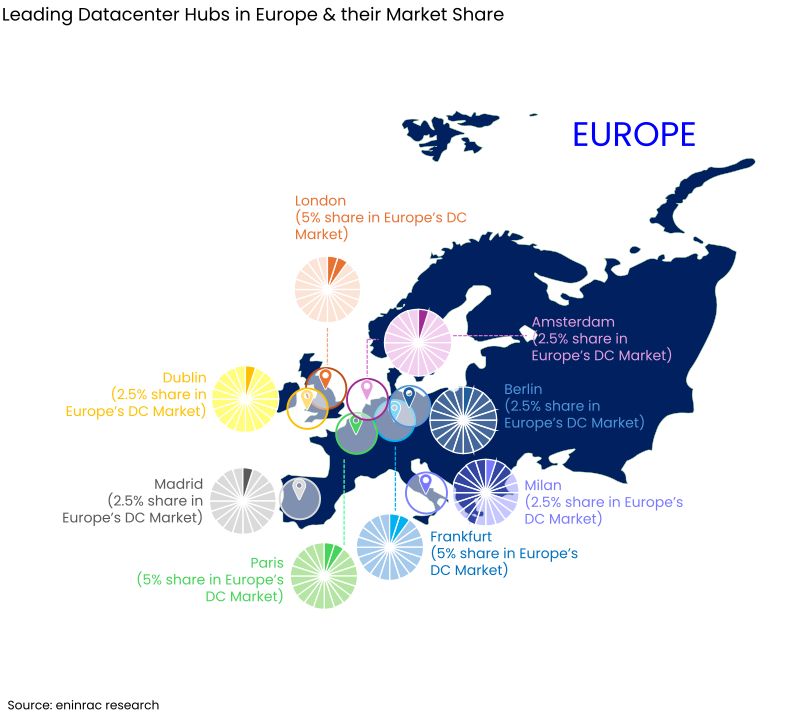
European Union to mobilize about US$ 234 Billion in AI- focused investments, intensifying business case for datacenter value chain
Driven by artificial intelligence, cloud computing, and digital transformation initiatives, the Europe data center market is entering a period of unprecedented expansion. Rising demand for hyperscale infrastructure, AI-ready facilities, and sustainable power solutions is creating significant opportunities across the digital infrastructure value chain.
The Europe data center market was valued at approximately US$47 Billion in 2024 and is forecast to expand to nearly US$97 Billion by 2030, reflecting its central role in enabling Europe’s digital and AI-led growth agenda. The International Monetary Fund estimates that the accelerating adoption of artificial intelligence could lift global GDP growth by an additional 0.5 percentage points annually between 2025 and 2030, contingent upon the timely and large-scale deployment of datacentre infrastructure.
Across major European economies, datacentres have already emerged as a material driver of investment, economic output, and productivity. In the Netherlands, the datacentre and cloud ecosystem accounts for nearly 20% of total foreign direct investment, making it the single largest contributor to FDI inflows. In Germany, datacentres generated an estimated US$ 12.16 billion in direct and indirect GDP contribution in 2024, a figure projected to more than double to approximately US $ 27 Billion by 2029.
Comparable trends are evident in the Nordics, where Norway’s datacentre sector contributed an estimated US $ 281 Million to the economy in 2023, delivering higher economic value per unit of electricity consumed than traditional power-intensive industries such as chemicals manufacturing
For utilities, renewable energy developers, grid operators, cooling technology providers, and hyperscale operators, this expansion cycle represents one of Europe's largest digital infrastructure investment opportunities. Growing AI workloads are increasing power density requirements, creating long-term demand for reliable electricity supply, renewable energy procurement, and grid modernization.
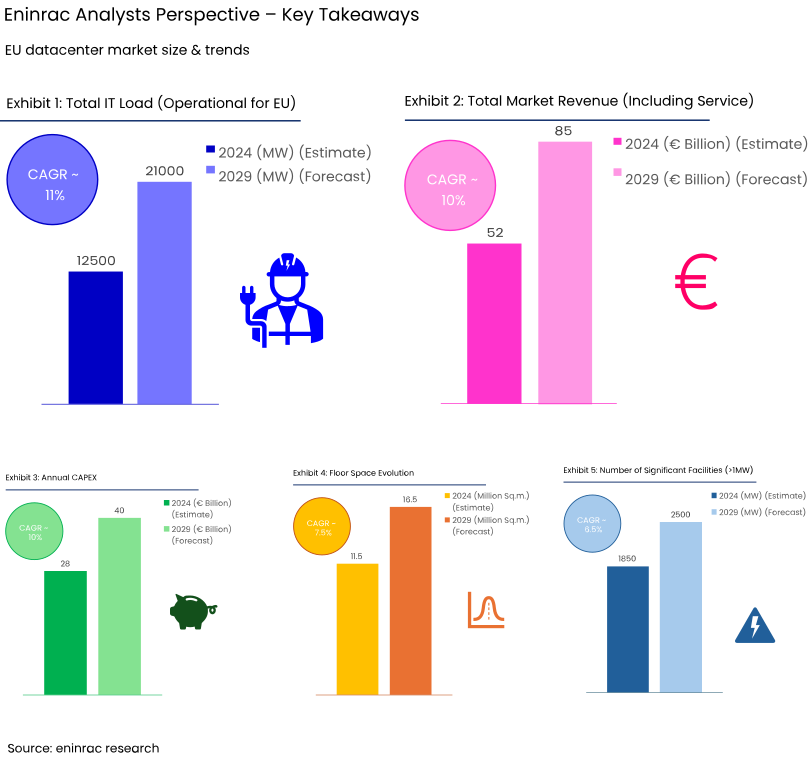
- Total IT Load (Operational for EU): We see a sharp rise in operational IT load from about 12,500 MW in 2024 to nearly 21,000 MW by 2029. This equals about 8,500 MW of net new capacity in five years. Hyperscale cloud drives most of this growth. AWS, Microsoft, and Google alone account for more than 60 percent of announced capacity additions across FLAP D and Nordic markets. Enterprise digitization adds steady demand. Banking, manufacturing, and public services migrate core workloads from on premises to colocation and cloud. AI workloads amplify this trend. A single large AI cluster can consume 20 to 50 MW, which accelerates power demand concentration in fewer but larger campuses.
- Total Market Revenue (Including Service): Market revenue grows from roughly €48 to €52 billion in 2024 to €78 to €85 billion by 2029. Growth tracks capacity but also pricing power. Colocation providers charge higher rates for high density racks above 15 kW. In Frankfurt and London, average pricing for such racks already exceeds standard rates by 25 to 40 percent. Value added services push revenue further. These include interconnection, managed services, compliance hosting, and sovereign cloud offerings. You see revenue rising faster in Western and Central Europe, where regulatory complexity favors premium providers.
- Annual CAPEX: Annual CAPEX increases from about €25 to €28 billion to €35 to €40 billion by 2029. New facility construction absorbs the largest share. A greenfield hyperscale campus now costs €8 to €10 million per MW, up from €6 to €7 million five years ago. AI ready infrastructure raises costs. Liquid cooling, reinforced power distribution, and grid upgrades demand higher upfront spend. You also see capital flowing into land banking and power reservation. In constrained markets like Dublin and Amsterdam, early control of grid access has become a strategic investment.
- Floor Space Evolution: Total data center floor space expands from around 11.5 million square meters to 16.5 million square meters. Physical growth stays moderate compared to power growth. High density design explains this gap. Average rack density has moved from 6 to 8 kW a decade ago to 12 to 15 kW today. Some AI halls exceed 30 kW per rack. You gain more compute per square meter, which limits land use but raises engineering complexity. Multi story facilities also contribute, especially in Paris and Frankfurt where land scarcity is acute.
- Number of Significant Facilities (>1MW): The number of significant facilities rises from about 1,850 to around 2,500 by 2029. Growth does not come only from hyperscale. Edge and secondary markets matter. Cities like Madrid, Milan, Warsaw, and Stockholm see multiple 5 to 20 MW builds to support latency sensitive workloads. Enterprises also prefer regional redundancy, which increases site count even when total power concentrates. You should expect more smaller facilities paired with fewer mega campuses above 100 MW.
London & Dublin: Key Growth Drivers in the UK and Ireland Data Center Market
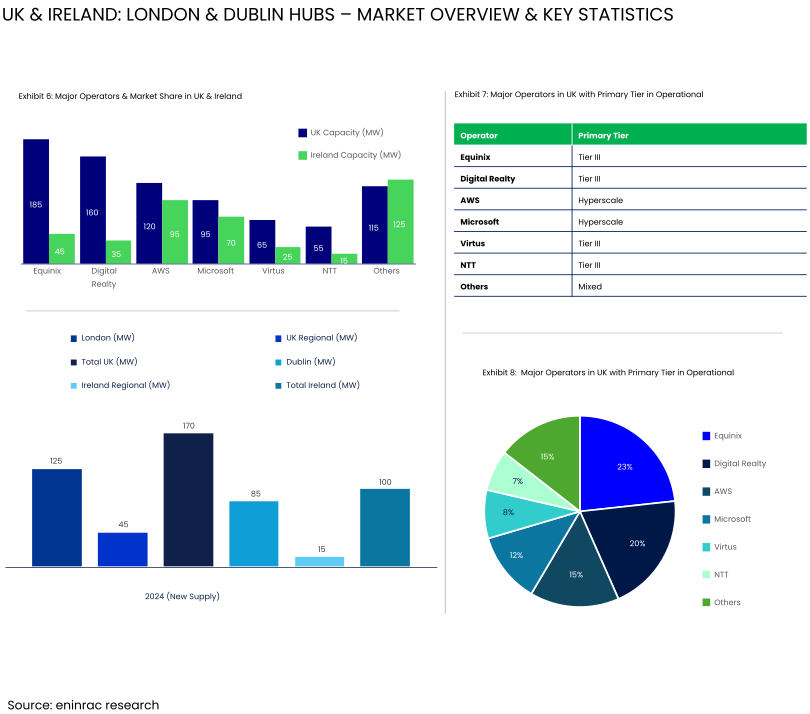
Tier Level Capacity Distribution - Hyperscale facilities represent the largest share of installed capacity. In 2024, hyperscale sites accounted for 675 MW, driven primarily by London and Dublin. Tier III facilities followed with 555 MW, serving enterprise and colocation demand. Tier II and Tier I facilities accounted for 320 MW combined, with declining relevance as operators prioritize higher resilience and scalability.
Market Positioning & Outlook - London and Dublin will remain anchor markets for digital infrastructure in Europe. You face a supply constrained environment in core hubs, with sustained pricing strength and limited vacancy. Regional markets present medium term expansion opportunities as power infrastructure improves and demand spillover accelerates.
Market Drivers in London Hub
- Financial services digitization (35% of demand)
- Cloud region expansion by hyperscalers
- AI/ML workload growth (+42% YoY)
- Low latency connectivity to Europe
Market Drivers in Dublin Hub
- Tax incentives for tech companies
- Direct transatlantic cables (6 major routes)
- Hyperscale concentration (AWS, Google, Microsoft)
- Growing data sovereignty demand from EU clients
Paris & Amsterdam: Market Size, Capacity Expansion and Growth Trends
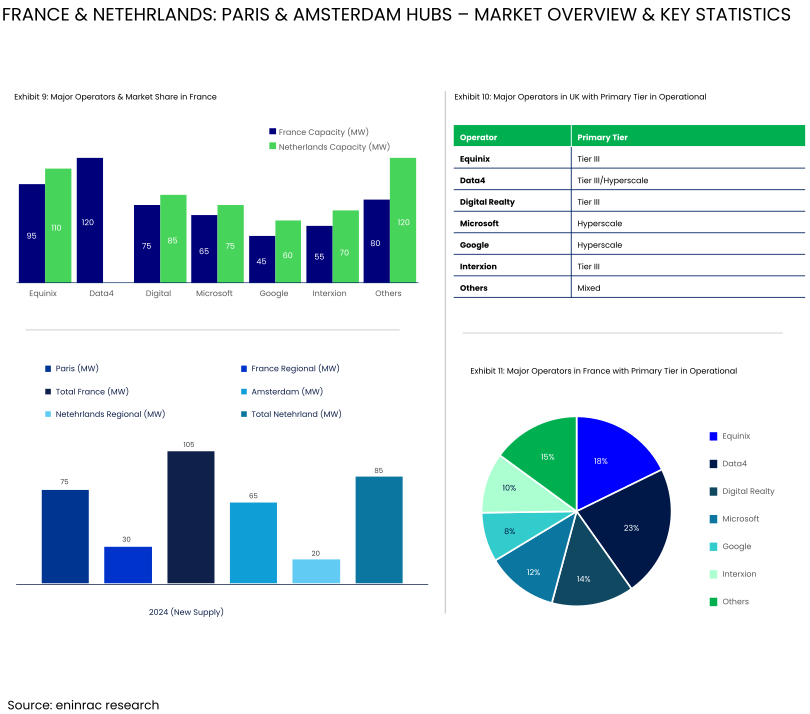
Tier Level Capacity Distribution - Hyperscale facilities dominate capacity additions. In 2024, hyperscale capacity reached 495 MW, accounting for the largest share of total capacity. Tier III facilities followed closely at 500 MW, supporting enterprise and colocation demand. Paris and Amsterdam together accounted for over 75 percent of hyperscale capacity. Regional markets remain Tier III led, with limited large scale hyperscale penetration.
Market Positioning & Outlook - Paris benefits from strong domestic demand, regulatory driven data localization, and expanding cloud adoption. Amsterdam maintains its role as a pan European connectivity hub, supported by dense network interconnections and hyperscale campuses.
Market Drivers in Paris Hub
- Digital sovereignty initiatives ("Cloud de Confiance")
- Low carbon nuclear energy advantage
- Government-led digital transformation
- Growing fintech and AI ecosystem
Market Drivers in Amsterdam Hub
- Digital gateway to Europe
- Excellent fiber connectivity (AMS-IX largest internet exchange)
- Sustainability leadership (100% renewable targets)
- Strong regulatory framework
Major Data Center Projects Under Construction Across the UK, France, Ireland and Netherlands (2025–2026)
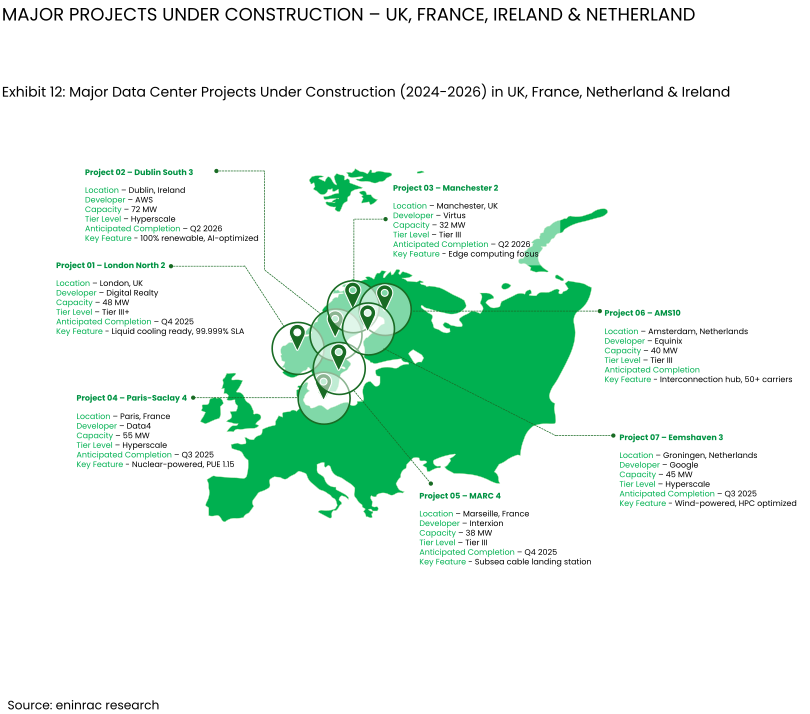
Upcoming large scale data center developments across the UK, Ireland, France, and the Netherlands highlight the next phase of capacity expansion, with a clear shift toward hyperscale readiness, sustainability, and high-density workloads.
Between 2025 and 2026, over 330 MW of new capacity is scheduled across seven major projects. Hyperscale developments account for more than 170 MW, led by AWS in Dublin at 72 MW and Google in Eemshaven at 45 MW. These projects signal continued hyperscalers commitment to Northern and Western Europe for AI, HPC, and cloud core workloads.
Colocation led projects remain focused on resilience and interconnection. Digital Realty’s London North 2 and Equinix’s AMS10 together add 88 MW of Tier III and Tier III+ capacity, strengthening core hub supply where vacancy remains tight. Interxion’s MARC 4 in Marseille reinforces the city’s role as a strategic subsea cable landing and connectivity gateway.
Energy efficiency and sustainability emerge as defining themes. Projects in Dublin, Paris Saclay, and Eemshaven are fully aligned with renewable or low carbon power sources, achieving PUE benchmarks as low as 1.15. Liquid cooling readiness and AI optimized designs are increasingly standard rather than differentiators.
From an Eninrac assessment perspective, this pipeline reflects a market prioritizing scalable hyperscale campuses, energy secure locations, and network dense sites. You should expect sustained pricing strength in core hubs, faster absorption of hyperscale capacity, and growing strategic relevance of secondary locations such as Marseille, Manchester, and Groningen.
Nordics Data Center Market: Sweden, Denmark, Finland, Norway and Iceland Overview & Key Statistics
Nordic – Data Center Market Overview
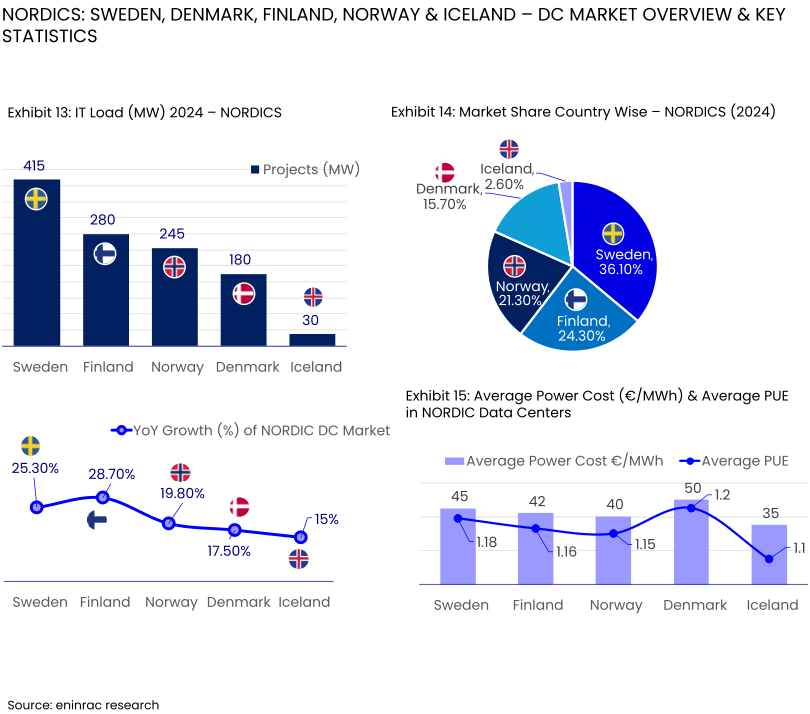
- Market Overview - The Nordic region continues to strengthen its position as a preferred destination for large scale data center deployments. In 2024, total IT load across Sweden, Finland, Norway, Denmark, and Iceland reached 1,150 MW. Market expansion is driven by low carbon power availability, competitive electricity pricing, and favorable climatic conditions that support high energy efficiency.
- Capacity Distribution & Market Share - Sweden leads the region with 415 MW of installed IT load, accounting for 36.1% of total Nordic capacity. Finland follows with 280 MW and a 24.3% market share, reflecting strong hyperscale investment momentum. Norway contributes 245 MW, representing 21.3% of regional capacity, while Denmark accounts for 180 MW or 15.7%. Iceland remains a niche market with 30 MW, representing 2.6% of total capacity.
- Power Cost Competitiveness - Power costs remain a key competitive advantage for the Nordics. Iceland offers the lowest average power cost at €35 per MWh, followed by Norway at €40 per MWh and Finland at €42 per MWh. Sweden maintains competitive pricing at €45 per MWh. Denmark records the highest average power cost in the region at €50 per MWh, reflecting grid structure and taxation differences.
- Growth Dynamics - Growth rates across the Nordics remain among the highest in Europe. Finland recorded the strongest year over year growth at 28.7%, supported by hyperscale campus developments and strong grid capacity. Sweden followed with 25.3% growth, driven by sustained investment from cloud and AI focused operators. Norway and Denmark recorded growth of 19.8% and 17.5% respectively, reflecting steady expansion aligned with power availability and sustainability policies. Iceland recorded growth of 15.0%, albeit from a smaller base.
- Energy Efficiency and PUE Benchmark - The Nordic region continues to set global benchmarks for energy efficiency. Average PUE levels range between 1.10 and 1.20. Iceland leads with an average PUE of 1.10, supported by geothermal cooling and stable ambient conditions. Norway and Finland follow with PUE levels of 1.15 and 1.16 respectively. Sweden averages 1.18, while Denmark records a slightly higher PUE of 1.20 due to denser urban deployments.
Frequently Asked Questions: Europe's Data Center Market
-
What is the current size of Europe's data center market and what is the forecast by 2030?
Europe's data center market was valued at approximately US$47 billion in 2024 and is forecast to expand to nearly US$97 billion by 2030, reflecting a CAGR of approximately 12.8%. This growth is driven by surging AI workloads, cloud computing adoption, hyperscale infrastructure investments, and Europe's broader digital transformation agenda.
-
Which countries are the leading hubs in Europe's data center market?
The dominant hubs in Europe's data center market are the FLAP-D markets — Frankfurt, London, Amsterdam, Paris, and Dublin. Together, London and Dublin account for over 675 MW of hyperscale capacity, while Paris and Amsterdam jointly represent over 75% of hyperscale capacity in their region. Beyond FLAP-D, the Nordic countries — Sweden, Finland, Norway, Denmark, and Iceland — are emerging as high-growth markets, with Finland recording the strongest year-over-year growth at 28.7% in 2024.
-
What is driving hyperscale data center growth in Europe?
Hyperscale data center growth in Europe is primarily driven by AI and machine learning workload expansion, with a single large AI cluster consuming 20 to 50 MW of power. Major cloud providers — AWS, Microsoft, and Google — account for more than 60% of announced capacity additions across FLAP-D and Nordic markets. Additional drivers include cloud region expansions, digital sovereignty regulations such as France's "Cloud de Confiance" initiative, and Europe's push for secure, compliant infrastructure under GDPR.
-
How much investment is flowing into Europe's data center market?
Annual capital expenditure in Europe's data center market is projected to grow from approximately €25–28 billion in 2024 to €35–40 billion by 2029. The European Union is also mobilizing around US$234 billion in AI-focused investments, which directly intensifies the business case for data center infrastructure. A greenfield hyperscale campus now costs €8–10 million per MW to build, up from €6–7 million five years ago, reflecting rising costs for AI-ready liquid cooling systems and grid upgrades.
-
What role does renewable energy play in Europe's data center market?
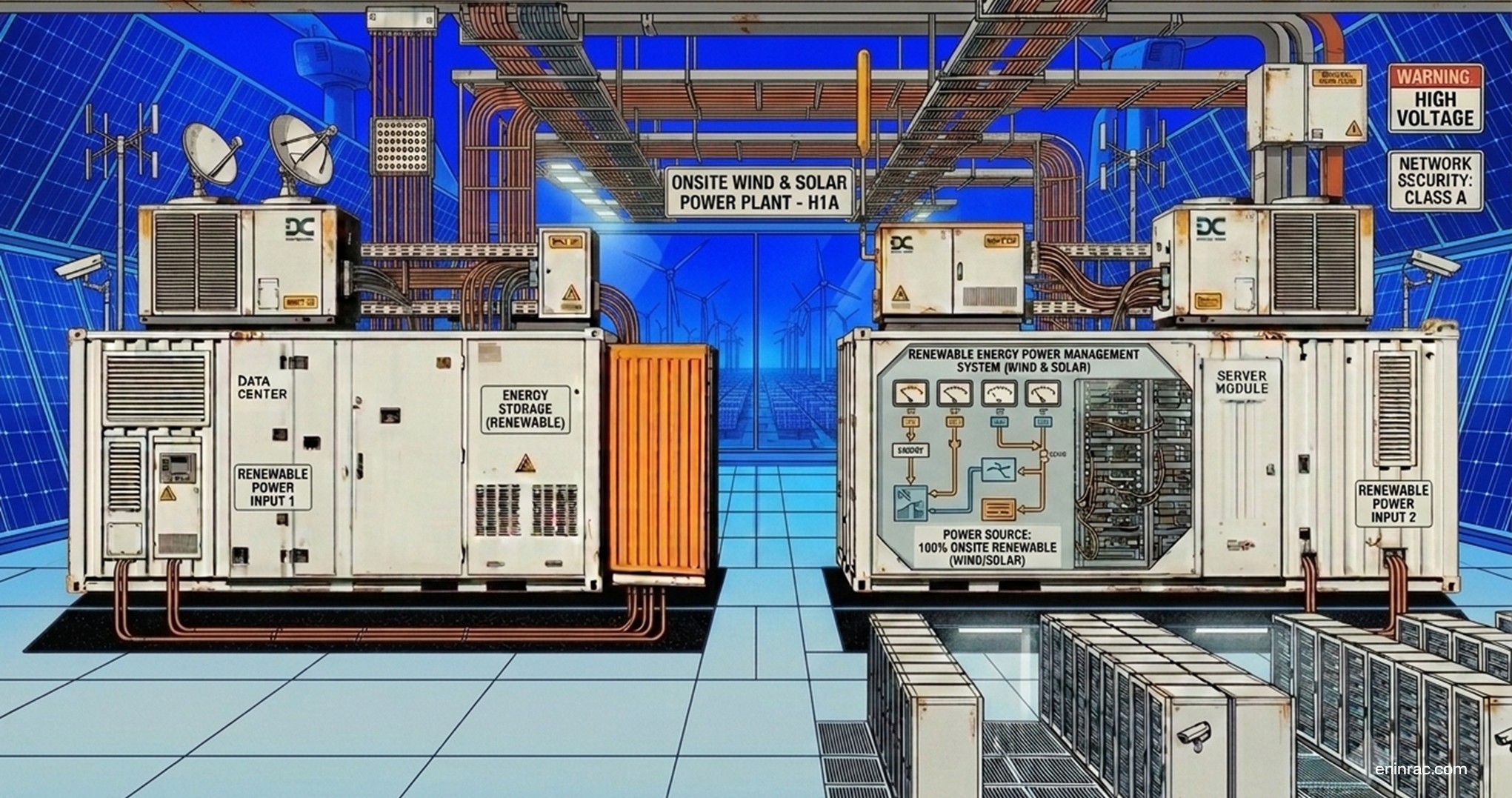
Renewable and low-carbon energy is a defining competitive advantage in Europe's data center market, particularly in the Nordic region. Iceland leads with an average power cost of €35/MWh and a best-in-class PUE of 1.10, supported by geothermal cooling. Norway and Finland follow closely with PUE benchmarks of 1.15 and 1.16 respectively. Across the broader market, 70% of operators already meet a standard of at least 75% renewable or hourly carbon-free energy, and major projects in Dublin, Paris Saclay, and Eemshaven are fully aligned with renewable power sources.
-
What are the biggest challenges facing Europe's data center market growth?
The single greatest challenge facing Europe's data center market is power and energy access. Over 67% of data center operators cite grid access as their primary operational constraint, particularly in major metropolitan markets like Amsterdam and Dublin where land and power reservation have become strategic investment priorities. High capital expenditure requirements, strict environmental compliance standards, and permitting bottlenecks in core hub cities further slow infrastructure deployment, pushing operators toward secondary markets such as Madrid, Milan, Warsaw, and Stockholm.
-
How is AI demand reshaping Europe's data center infrastructure requirements?
AI is fundamentally transforming Europe's data center market by driving a shift toward higher power density facilities. Average rack density has moved from 6–8 kW a decade ago to 12–15 kW today, with some AI-optimized halls exceeding 30 kW per rack. This is accelerating demand for liquid cooling readiness, reinforced power distribution, and AI-optimized campus designs. The International Monetary Fund estimates that accelerating AI adoption could lift global GDP growth by an additional 0.5 percentage points annually between 2025 and 2030, contingent on large-scale data center deployment — making Europe's infrastructure buildout a critical economic priority.
Conclusion: Europe's Data Center Market at an Inflection Point
Europe's data center market is no longer simply growing — it is structurally transforming. From the established FLAP-D hubs of Frankfurt, London, Amsterdam, Paris, and Dublin to the rapidly expanding Nordic markets and emerging secondary cities like Madrid, Milan, and Warsaw, the entire European digital infrastructure landscape is being reshaped by the twin forces of AI adoption and hyperscale investment.
The forecast trajectory — from US$47 billion in 2024 to nearly US$97 billion by 2030 — reflects more than market expansion. It reflects a fundamental shift in how Europe's economies are being built. Data centers are no longer back-office infrastructure; they are the core engine of Europe's digital and AI-led growth agenda, contributing billions in GDP across the Netherlands, Germany, and the Nordics, and attracting foreign direct investment at an unprecedented scale.
For utilities and grid operators, the opportunity lies in the 8,500 MW of net new IT load capacity expected to come online by 2029 — each megawatt representing long-term, contracted power demand that favors reliable, renewable-backed supply. For renewable energy developers, the alignment between hyperscale operators' sustainability commitments and Europe's low-carbon power regions — particularly Iceland, Norway, and Finland — creates a compelling pipeline of long-duration offtake agreements. For colocation providers and technology vendors, rising rack density, liquid cooling adoption, and AI-optimized facility design are redefining the cost and capability benchmarks that will separate market leaders from laggards through the rest of this decade.
That said, the path forward is not without friction. Power access remains the defining constraint across core European markets. Grid congestion, permitting complexity, and the sheer capital intensity of next-generation facilities mean that not every operator, every market, or every investment thesis will succeed equally. The winners in Europe's data center market through 2030 will be those who secured grid access early, built in power-advantaged locations, and designed facilities ready for the AI workloads that are still ramping up.
Critically, the center of gravity is shifting. Secondary markets are absorbing spillover demand from capacity-constrained FLAP-D hubs faster than anticipated. The Nordics are setting global benchmarks for energy efficiency, sustainability, and power cost competitiveness. And an EU commitment of US$234 billion in AI-focused investment ensures that the demand pipeline feeding this infrastructure buildout is not speculative — it is policy-backed and accelerating.
Europe's data center market, in short, offers one of the most significant digital infrastructure investment opportunities of this decade. The scale is confirmed. The drivers are structural. And for those positioned across the data center value chain — from power supply to hyperscale construction to colocation services — the window to capture that opportunity is open right now.
Unlock the Full Europe Data Center Market Outlook to 2030
This article covers the key market trends, regional hub analysis, and growth outlook for Europe's data center market through 2030. For the complete data model, operator benchmarking, capacity pipeline breakdown, and investment trend analysis, download the full report below.